



Florian Rabitz is a Chief Researcher in the KTU Faculty of Social Sciences, Arts and Humanities.
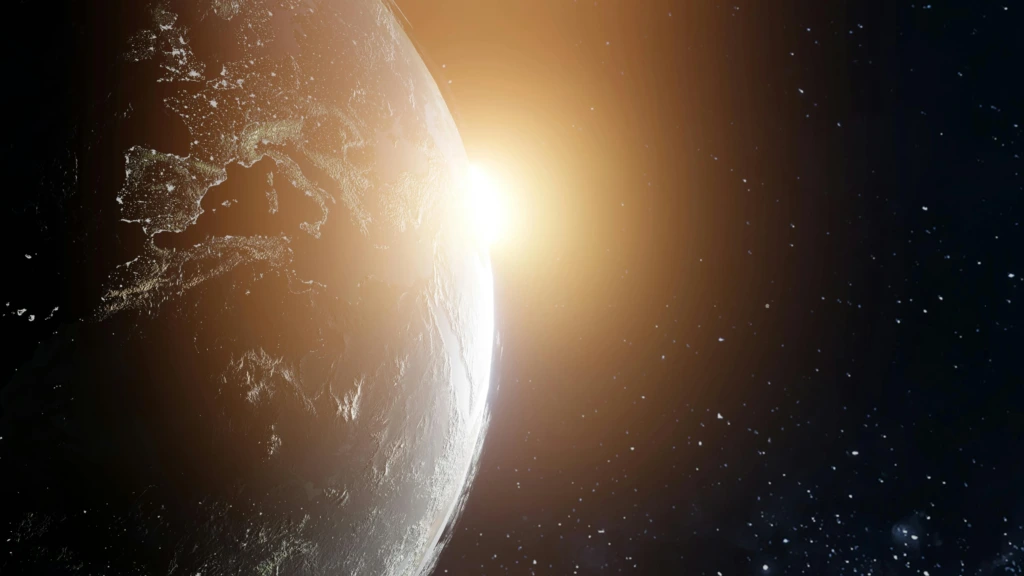
Our skies are not what they used to be. Artificial light sources are increasingly making the night brighter. The thousands of satellites that are being launched every year exacerbate this problem by reflecting light. The loss of dark skies is rapidly becoming a major challenge for the global environment but also for space observation.
When human astronomy began in ancient Mesopotamia some five thousand years ago, humans were almost five thousand years away from inventing the light bulb. While we cannot know for sure, the skies over Nineveh, Ur, or Babylon must have been quite different from today. Artificial light sources and reflective space objects, mostly in the form of the satellite mega-constellations that we need for watching Netflix and surfing the internet while on an airplane, increase the brightness of the night sky by about 10% per year.
And things might get worse soon: Commercial operators are exploring the option of launching thousands of reflective mirrors into Low Earth Orbit for redirecting sunlight to the surface to illuminate the night, allowing for 24-hour solar power or enhanced nighttime fisheries.