Skip to content
Red background with white silhouettes of five people, including a child and an elderly person with a cane, and the text “1 No Poverty.” Symbolizes efforts to end poverty in all its forms.
Dark burgundy background with a white upward-trending graph and building shapes, with the text “8 Decent Work and Economic Growth.” Emphasizes inclusive and sustainable economic growth and decent work.
Green background with a white eye shape containing the Earth, and the text “13 Climate Action.” Represents urgent action to combat climate change and its impacts.

Researchers at KTU: Lithuania is a tough geopolitical knot to untie, hampered by internal strife

Important | 2025-12-15

Russia’s war in Ukraine and ever-lasting geopolitical tension force many to look to the east and assess our military capabilities constantly. However, a country’s actual safety comprises many more elements than armoured vehicles or anti-aircraft defence.

The most recent study by the researchers of Kaunas University of Technology (KTU), Dr Vytautas Valentinavičius, Prof Dr Eglė Butkevičienė and Prof Dr Vaidas Morkevičius, reveals an intriguing and contrasting picture of Lithuania in the context of the European Union (EU).

Although in the EU, we are one of the strongest and most alert in geopolitics, the foundation of our state is quietly undermined by social exclusion and environmental issues. Researchers warn us that long-term state resilience depends not only on the ability to repel external enemies, but also on how secure citizens feel daily.
What is democratic resilience?

Many think of resilience as a solid wall against which the wave of crisis crashes. However, democratic resilience is interpreted in a much broader and dynamic sense in scientific discourse. Democratic systems, institutions and citizens must not only withstand shocks, but also respond flexibly to emerging challenges, absorb them and successfully recover afterwards.

According to researchers, democracy is not inherently resilient – its vitality is directly dependent on the state of economic, social and political systems.

Because of this, to evaluate the real situation in Lithuania, researchers implementing the project “Strengthening resilience in communities and society through citizen science and citizenship”, supported by the Research Council of Lithuania, used the European Commission Joint Research Center (JRC) resilience dashboards, which measure states’ resilience through four main dimensions: geopolitical, digital, social-economic and green.

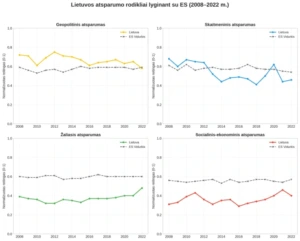
Lithuania’s resilience indicators compared to the EU 2008–2022

The champions of geopolitics

According to the study data, Lithuania is confidently overtaking the EU average in geopolitical resilience. Researchers support the data with the historical and strategic consciousness of the Lithuanians.

Due to constant proximity to aggressively-minded neighbours Russia and Belarus. Therefore, Lithuanians have never had the luxury of wearing rose-tinted glasses. Such a level-headed threat assessment led to decisive steps, which are now paying off big time.

For example, the state’s decision to build its own liquefied natural gas (LNG) terminal back in 2010, aimed at gaining energy independence from Gazprom, strengthened the state’s resilience.

Consistently strengthened defence also contributes to the country’s resilience. After the annexation of Crimea in 2014, Lithuania was one of the first countries to respond to the new reality by reinstating compulsory military service and increasing defence funding, which led the country to become one of the most reliable NATO allies.

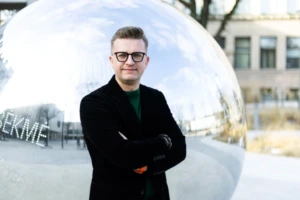
The researcher at KTU, Vytautas Valentinavičius

Looking at society’s digital resilience, Lithuania’s results are solid and reach the EU average. The researchers notice that in the field, Lithuania is contrasting. On one hand, we can be proud of our well-developed public services, such as an implemented e-health system, 5G connection, covering almost 99 percent of residential areas. However, the overall picture is spoiled/spoilt by inertia in the business sector.

According to the reports, small and medium-sized businesses still have a hard time using advanced technologies such as artificial intelligence or cloud systems, while many citizens lack basic digital skills, which is a current issue, preventing the full exploitation of technological potential.

Social exclusion and poverty – Lithuanian Achilles’ heel

The carried out study exposes Lithuania’s biggest weakness – social and economic resilience, which is below the EU average.

Although macroeconomic indicators often surprise, the reality in many households is different. Lithuania has one of the highest levels of income inequality in the EU. High Gini level (an indicator measuring income or property inequality) and high risk of poverty, especially in rural areas and among elders, demonstrated that the benefits of economic growth are distributed unevenly.

The researcher at KTU, Eglė Butkevičienė

Additionally, the researchers note growing regional inequalities – the quality of life, productivity and social opportunities in cities and regions are worlds apart.

This situation is closely related to democratic resilience, as when a huge part of society feels left out, the trust in the state and the willingness to defend it in the face of crisis declines.

The green illusion – we’re late for the sustainability train

Researchers note that although Lithuania often presents itself as a country of natural landscapes, resilience indicators paint a different picture – we are below the EU average in the green dimension. This is another field where the ambitions exceed reality.

The main obstacle is the transport sector, where greenhouse gas emissions are not only failing to decrease, but are increasing. International assessments demonstrate that Lithuania’s climate policy is insufficient to achieve the ambitious 2030 targets, and according to many environmental indicators, we are classified as average or even lagging behind.

Researchers warn that in this modern world, the ability to adapt to climate change becomes an integral part of democratic legitimacy and state stability.

The researcher at KTU, Vaidas Morkevičius

Researchers state that summarising the study results, it can be concluded that Lithuania is like a fortress with strong defensive fortifications on the outside, but fragile foundations on the inside. According to them, Lithuania is successfully investing in security, military defence and geopolitical stability. However, we may not notice the internal threats, which may prove to be no less dangerous than external threats in the long run.

To ensure true democratic resilience, researchers believe that policymakers will have to shift their focus from purely geopolitical issues to addressing social justice and environmental problems. Only a balanced approach, encompassing both external and internal strengthening of the state, can create a sustainable and resilient democracy.

This article was written based on the publication of KTU researchers: Valentinavičius, V., Morkevičius, V., & Butkevičienė, E. (2025). Democratic resilience in Lithuania and the EU: examining the role of civil society and citizen participation. Viešoji politika ir administravimas/Public Policy and Administration, 24(3), 447–466. 

The KTU researchers’ investigation is the part of the research project “Strengthening REsilience in Communities and sOciety through citizeN sciEnce and CiTizenship (RECONECT)” (project No. S-VIS-23-14), funded by the Lithuanian Research Council under the competitive priority research programme “Strengthening Societal Resilience and Crisis in the Context of the Contemporary Geopolitical Situation”.