Skip to content
Orange background with white icons of various buildings, including a house and skyscrapers, and the text “11 Sustainable Cities and Communities.” Represents the goal to make cities inclusive, safe, resilient, and sustainable.
Dark blue background with a white dove holding an olive branch above a gavel, and the text “16 Peace, Justice and Strong Institutions.” Represents promoting peaceful and inclusive societies, justice, and accountable institutions.

The best KTU monographies enhance Lithuanian medicine, society and education

Important | 2025-12-12

Kaunas University of Technology (KTU) has announced the winners of the 2025 Best Monograph Competition. The jury selected three monographs released by international publishers that stand out for their scientific relevance, interdisciplinary approach and significant contribution to solving contemporary scientific and societal issues.

The first-place winner was a monograph by Prof. Habil. Dr Vytautas Ostaševičius, Vytautas Jūrėnas, Mantas Venslauskas and Laura Kižauskienė on non-invasive therapeutic technologies. The second place was awarded to Arvydas Grišinas’ monograph examining the crisis of truth in contemporary Western society, while the third-place winner was Tatjana Sidekersienė’s monograph (co-authored with Robertas Damaševičius) on digital solutions of escape rooms in education.

The breakthrough of non-invasive therapy: the possibilities of low-frequency ultrasound

The monograph Noninvasive Therapeutic Technologies: Stimulation of Physiological Processes, published by the prestigious Spring Nature, is the fourth monograph by Ostaševičius and the eighteenth book in his scholarly activities. The data confirms the international recognition of this academic publication – it has been viewed more than 4,000 times and has become one of the most popular works in its field, with the research described therein revealing an important breakthrough in non-invasive medicine.

KTU scholars were the first ones to systematically evaluate how different intensities and durations of low-frequency ultrasound affect hemodynamic parameters. The research shows that low-frequency acoustic waves can cause the red blood cell aggregates to dissociate, thereby improving gas exchange and blood flow. The fundamental breakthrough in this research area is associated with custom-developed and patented low-frequency ultrasonic transducer technology operating in radial oscillation mode and allowing deeper biological tissues to be reached, even penetrating the skull.

The experiments by the KTU scientists and their in vivo trials revealed evident physiological changes. It has been shown that ultrasound waves can penetrate human tissue four times deeper than waves emitted by current devices and their effect on blood circulation is clinically significant.

“The blood pressure drops, as low-frequency ultrasound reduces the concentration of individual red blood cells per unit of blood volume, which reduces blood viscosity. Blood viscosity is directly connected to haematocrit, which is responsible for transporting oxygen and carbon dioxide; therefore, blood tests are normalising. According to the in vivo trials, in seven minutes, pulmonary oxygen saturation increased by more than 10–15%, while blood pressure and heart rate decreased,” Ostaševičius commented on the research data.

This scientific discovery, described in the monograph, was made while carrying out a COVID-19-related project on pulmonary hypertension therapy. However, the device created has a much wider range of applications, as it can be used for clearing heart valve build-up, breaking down bacterial biofilms that prevent drugs from effectively treating inflammation, encapsulating drugs into red blood cells and using it in the treatment of stroke and cancer.

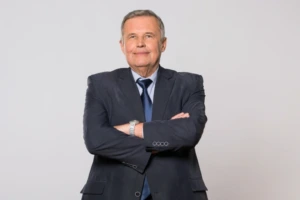
Vytautas Ostaševičius

According to the scientist, dolphin therapy may lead to similar hemodynamic improvement, as their acoustic waves mimic low-frequency ultrasound parameters. This effect can reduce blood viscosity, blood pressure and pulse, improve blood oxygenation and positively affect one’s emotional health. Although the effect of nervous stress on blood pressure has been extensively studied, the reverse link – the effect of blood pressure on the nervous system – has not yet been sufficiently investigated.

“This non-invasive form of therapy can become an alternative to traditional treatment. Currently, high-frequency ultrasound used in medical diagnostics and treatment increases blood viscosity and blood pressure, acts thermally and suppresses oxygenation. As approximately 1.3 billion people in the world have vascular diseases, we think that the technology created by the KTU has huge potential,” says Ostaševičius.

Information overload becomes a challenge to truth

The monograph The Western Crisis of Truth in the Early 21st Century: as the Enlightenment Dims by Dr Arvydas Grišinas, a researcher at the KTU Faculty of Social Sciences, Arts and Humanities, was acknowledged as both a relevant and critical approach in addressing issues faced by contemporary Western society. According to the author, this announcement was quite surprising, but at the same time, it became evident that the focus on research in the humanities is growing at the technological university.

The topics discussed in the monograph go far beyond academic discourse. Although the author is uncertain about the actual relevance of his research, it touches on the most sensitive current issues, such as telling the truth, observing changes in political culture and the impact of digital reality on real life.

Grišinas notes that fake and false information is abundant in the digital world, but the real problem is not disinformation. The most important aspects are how people navigate the information space and what political culture they shape by their actions.

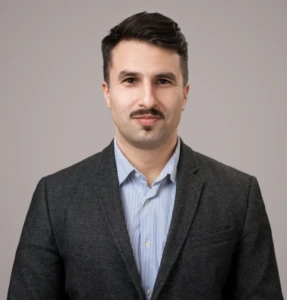
Arvydas Grišinas
Arvydas Grišinas

“In the current digital world, we are not only the consumers, but also the creators. Our speaking, sharing content and participation in public discourse have a greater impact and reach than ever before. Therefore, the intended meaning of speaking becomes crucial. We must ask ourselves whether we seek to tell the truth or whether we are speaking quickly, consumer-like or sometimes even consciously contributing to information noise. Our behaviour actively shapes the world we live in, alongside information and physical space. That is why it is necessary to be aware of the mind ecology and political culture in the digital age,” says the author of the monograph.

According to Grišinas, the society’s resilience to disinformation should be perceived not only as something to prevent, but rather as an ability to act responsibly in the world of fake meanings. Although we cannot avoid disinformation in the digital world, our individual choices determine whether a responsible, truth-based political culture will be fostered.

The monograph’s author suggests seeking historical events as examples, where living the truth was an effective counterbalance to institutionalised lies. According to Grišinas, the first step in addressing this issue is changing people’s attitude towards public space and our role within it.

In his monograph, Grišinas draws on historical experience, particularly the examples of dissident movements, where living the truth became a response to the lies entrenched in public discourse. Grišinas states that solutions to major problems in political culture exist both at the level of individual choices and at the wider social and political systems.

With this recognition, the author is researching and plans to continue researching philosophical studies. Currently, his interests lie in the concept of non-technicality and the analysis of the historicity of modernity, examining the state of modern society when the historical direction becomes unclear, while modernity faces ecological, political and philosophical limits.
Digital escape rooms facilitate learning processes

The monograph Digital Escape Room Designs in Education by Tatjana Sidekerskienė, the researcher at the KTU Faculty of Mathematics and Natural Sciences, and her coauthor Robertas Damaševičius, significantly contributes to the studies of modern education methods while exploring the potential of digital escape rooms in education and their application in different learning contexts. According to the researcher, this unexpected appraisal confirmed that innovative and playful educational methods are academically perceived as a promising direction in education.

According to Sidekerskienė, her research is not only relevant to the academic community, but also to our society, as digital technologies are a huge part of people’s lives and they change learning processes naturally. Today, learners expect active and dynamic engagement, but traditional teaching practices cannot always ensure that. The author notes that interactive and playful forms of teaching help learners better understand complex topics, encourage curiosity and allow them to apply their knowledge in practice.

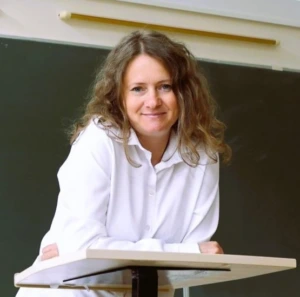
Tatjana Sidekerskienė

“The growing role of gamification in education is linked to the need to learn through experience. Alongside such interactive tools as Menti, Kahoot or activities in Moodle, digital escape rooms allow students to actively participate, experiment and see the results right away. This is particularly useful in mathematics, where abstract concepts are often difficult to relate to real-life situations,” notes Sidekerskienė.

“The design and decision of digital escape rooms allow learners to practically learn the most important future skills, such as critical thinking, problem solving, teamwork and digital literacy. By engaging in such activities, students learn to apply their knowledge in complex, real-life situations,” says the author.

Although this monograph became a significant overview of her long-standing work, the researcher continues to experiment with new forms of learning. She is currently researching how combining virtual learning environments with digital escape rooms can create coherent and engaging learning experiences in which independent work in a virtual environment translates into practical, collaborative challenges during lectures.