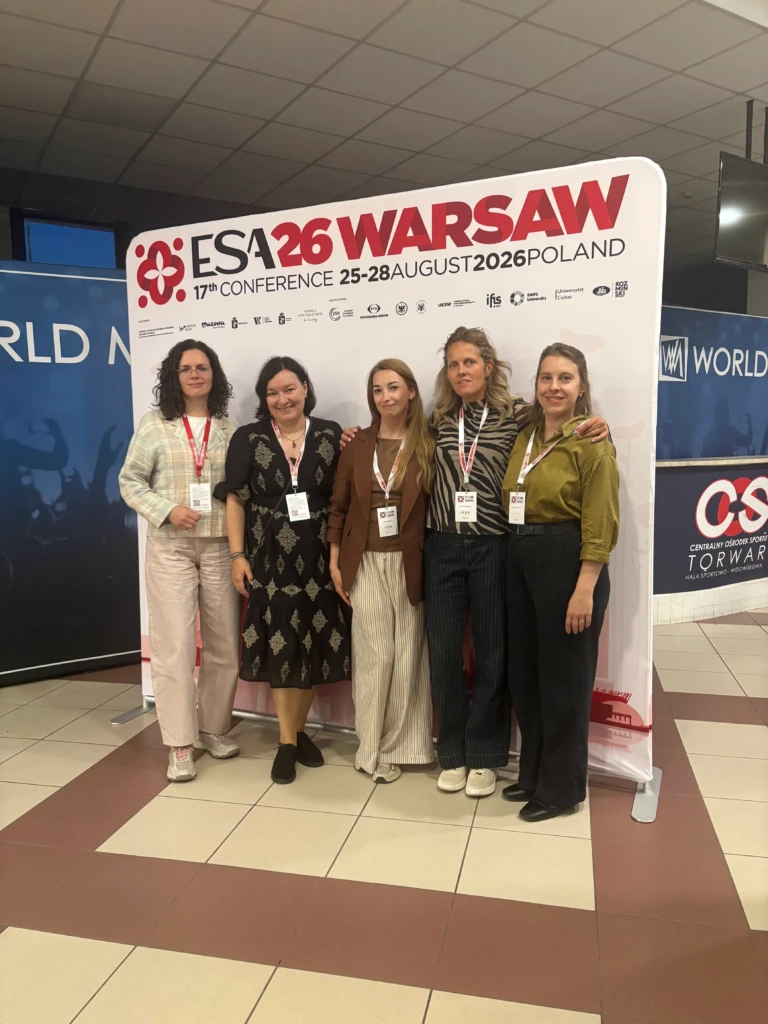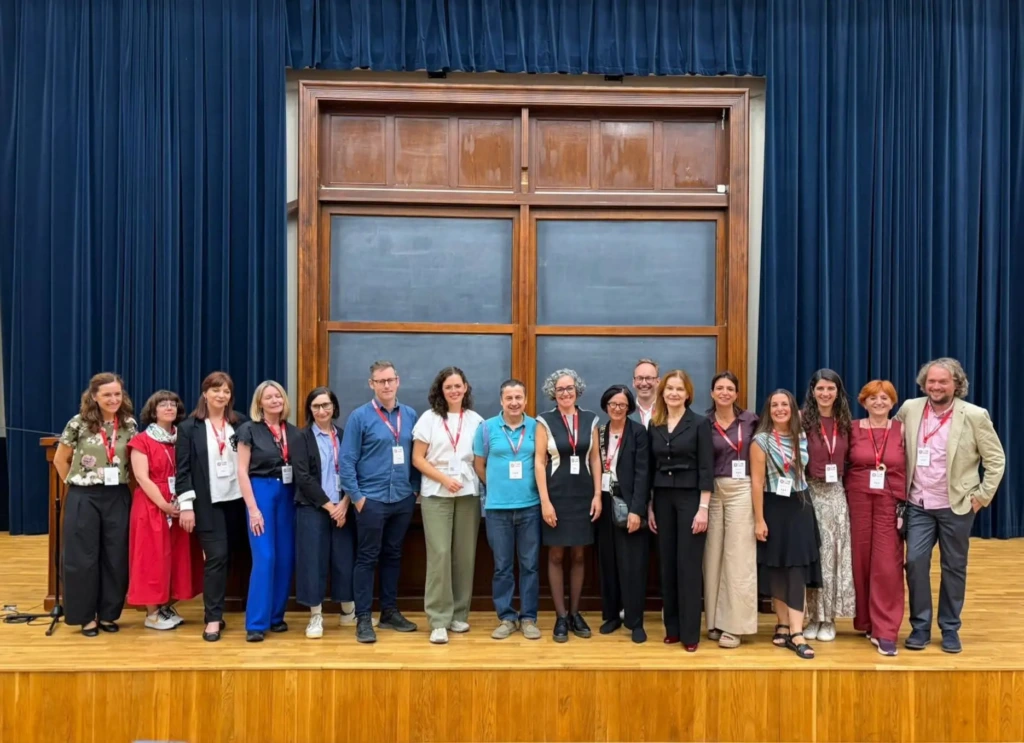





Researchers from the Kaunas University of Technology (KTU) research group “Civil Society and Sustainability” demonstrated academic leadership and presented sociological research at the 17th Conference of the European Sociological Association (ESA), held in Warsaw, Poland, from August 25 to 28, 2026. The conference, themed “Strengthening Democracies: Social Action, Solidarity, and Sustainable Futures,” brought together over 3,800 participants from across the globe. KTU researchers were elected to key governing bodies of the European sociological community, while also presenting research on the green transition, civil preparedness, populism, and environmental anxiety.
Prominent Appointments in European Sociology
Four KTU researchers have been elected or re-elected to major representative bodies within the European Sociological Association:
Prof. Audronė Telešienė has been elected as a member of the ESA Executive Committee, representing the university at the highest administrative level of European sociology. Re-elected for a second consecutive term (2026–2028), she will continue contributing to the strategic development of the European Sociological Association. Among her key priorities are the adoption and implementation of the Sustainability Recommendations for ESA Events, with particular attention to the Association’s major biennial conference, to be held in Tampere, Finland, in 2028, as well as promoting the principles and practices of open science and open data within the European sociological community.
Dr. Natalia Bełdyga has been elected as a board member and prof. Aistė Balžekienė continues as the advisory board member of the ESA’s Research Network 22 (RN22) on the Sociology of Risk and Uncertainty. This network is at the forefront of European and interdisciplinary research investigating how modern risks – ranging from environmental hazards to geopolitical crises – are perceived, managed, and communicated at individual and societal levels.
Dr Jonė Vitkauskaitė-Ramanauskienė has been re-elected for a second term to the Board of ESA Research Network RN12 “Environment and Society”, while prof. Audronė Telešienė continues to serve as a member of the network’s Advisory Board. Their continued involvement reflects sustained contribution to the network’s activities and to the development of environmental sociology within the European sociological community.
Contributions of KTU members from the Civil Society and Sustainability research group spanned several other vital areas of contemporary sociological debateL
PhD student Rūta Pelikšienė has initiated and co-organized Research Stream “Vegan Sociology for Nonhuman Animals”, which was the first separate research stream dedicated for vegan sociology studies in ESA history. By bringing together scholars working on veganism and its social dimensions, the stream gave greater visibility to this emerging area of sociological research and created opportunities for collaboration. In doing so, it contributed to building a stronger international research community around vegan sociology.
Research on the Green Transition, Crisis Governance and Populism
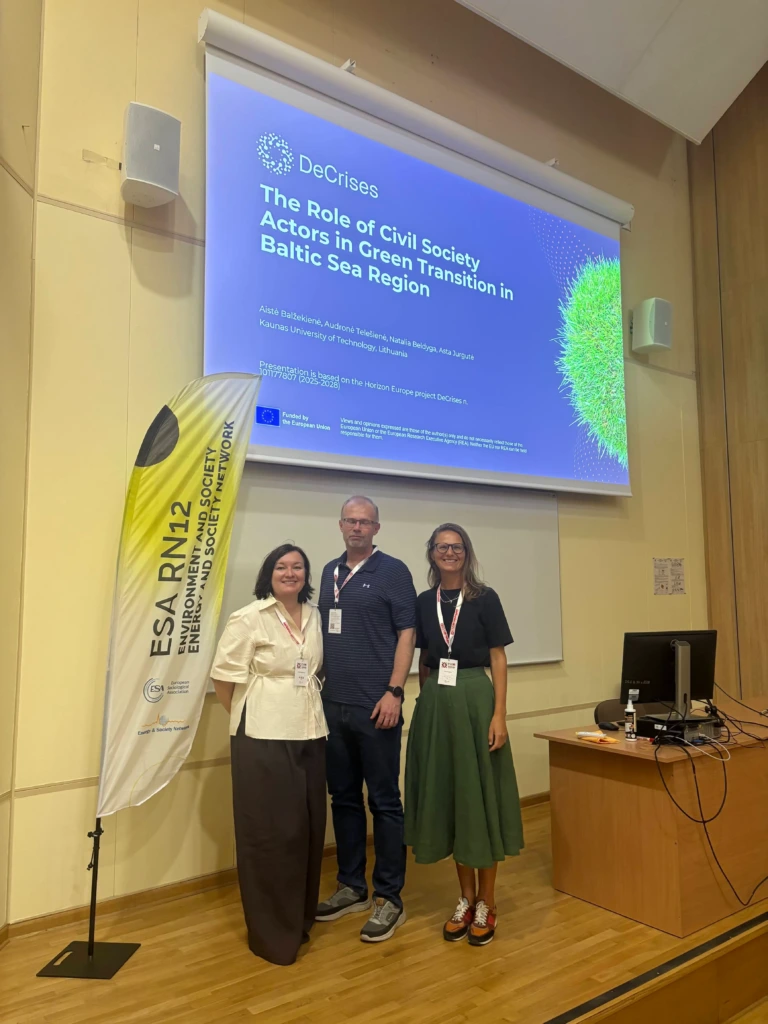
- Aistė Balžekienė, Audronė Telešienė, Natalia Bełdyga, and Asta Jurgutė delivered a joint presentation based on Horizon Europe project DeCrises entitled “The Role of Civil Society Actors in Green Transition in Baltic Sea Region“. Their study utilized qualitative content analysis to map how transboundary and regional non-governmental organizations (NGOs) operate in the Baltic Sea area – a region deeply affected by overlapping risks such as geopolitical tensions, energy security, and climate change impacts. The research revealed that current NGO engagement strategies focus primarily on information sharing collaboration, rather than full empowerment in decision-making and advocating for rights in a just green transition.
- Natalia Bełdyga presented a case study focused on civil preparedness in the face of geopolitical crises. Her paper, “Challenges and Lessons Learned in Civil Preparedness: A Case Study of Polish Border Region Communities’ Response to Crisis and Uncertainty,” examined local responses to the refugee crisis following Russia’s 2022 invasion of Ukraine. Based on qualitative interviews with border residents, civic organizations, and local institutions, the study highlighted the vital role of trust, informal networks, and resource
- Eglė Butkevičienė, alongside co-authors Vaidas Morkevičius and Vytautas Valentinavičius, presented a paper exploring the pressing political dynamics of “Exploring the Link between Euroscepticism and Populism: The Case of Lithuania”. Utilizing representative national survey data collected in mid-2025 (integrating the ISSP National Identity & Citizenship module), their study analyzed the demand-side relationship between populist attitudes and varying intensities of Euroscepticism in Lithuania.
Studies Environmental Anxiety, Veganism and Climate Concerns
- Co-authors Audra Balundė and Audronė Telešienė presented a study titled “When Does Pollution-Induced Anxiety Mobilize Action or Lead People to Distance Themselves?”. Funded by the Research Council of Lithuania, this post-doctoral study surveyed 700 residents living close to polluting industrial sites. It analyzed how community resilience, social support, and varying levels of anxiety affect whether residents take civic action (such as reporting pollution) or disengage and distance themselves.
- Rūta Pelikšienė presented a research paper “Beyond Human Solidarity: Veganism and Social Imaginaries of the Future”, drawing on data from her ongoing PhD research. The paper examines how vegans understand their relationship with non-human animals and imagine the future of society. The study offers a new perspective on veganism by connecting it to questions of solidarity, social change, and how we imagine possible futures beyond an anthropocentric society.
- Neringa Čėnaitė presented a paper titled “Family Planning and Climate Concerns: Psychosocial and Psychoanalytic Reflections”. The paper explored links between climate concerns and reproductive decision-making, highlighting the moral and ethical dilemmas surrounding procreative choices in the context of the climate crisis. The paper emphasised the value of interdisciplinary dialogue between sociologists and mental health professionals to better understand people’s choices and lived experiences.